 spitball
THE SHORT VERSION
What to take away
- Unsaid thoughts sit in working memory, which leans on attention; a new room, an interruption or a conversation turn can knock them out.
- Lab studies, mostly in virtual rooms, found memory dipped after walking through a doorway, but two independent teams' replications did not.
- In one lab task, interruptions averaging 2.8 seconds doubled errors in keeping your place in a sequence, and 4.4 seconds tripled them.
- Going back to the room didn't improve memory in a doorway study; try picturing what you were doing when the thought came instead.
- Our suggestion: before you cross a threshold, take five seconds to say the thought, tie it to where you're going, or save it.
WATCH THE IDEA
Keep a thought past the doorway in four moves
A short illustrated clip on why a thought can vanish when you walk into a new room, and what to do about it: some studies found memory dips after a doorway and others didn't, so say the thought out loud and save it somewhere outside your head before you move on.
Read the video transcript
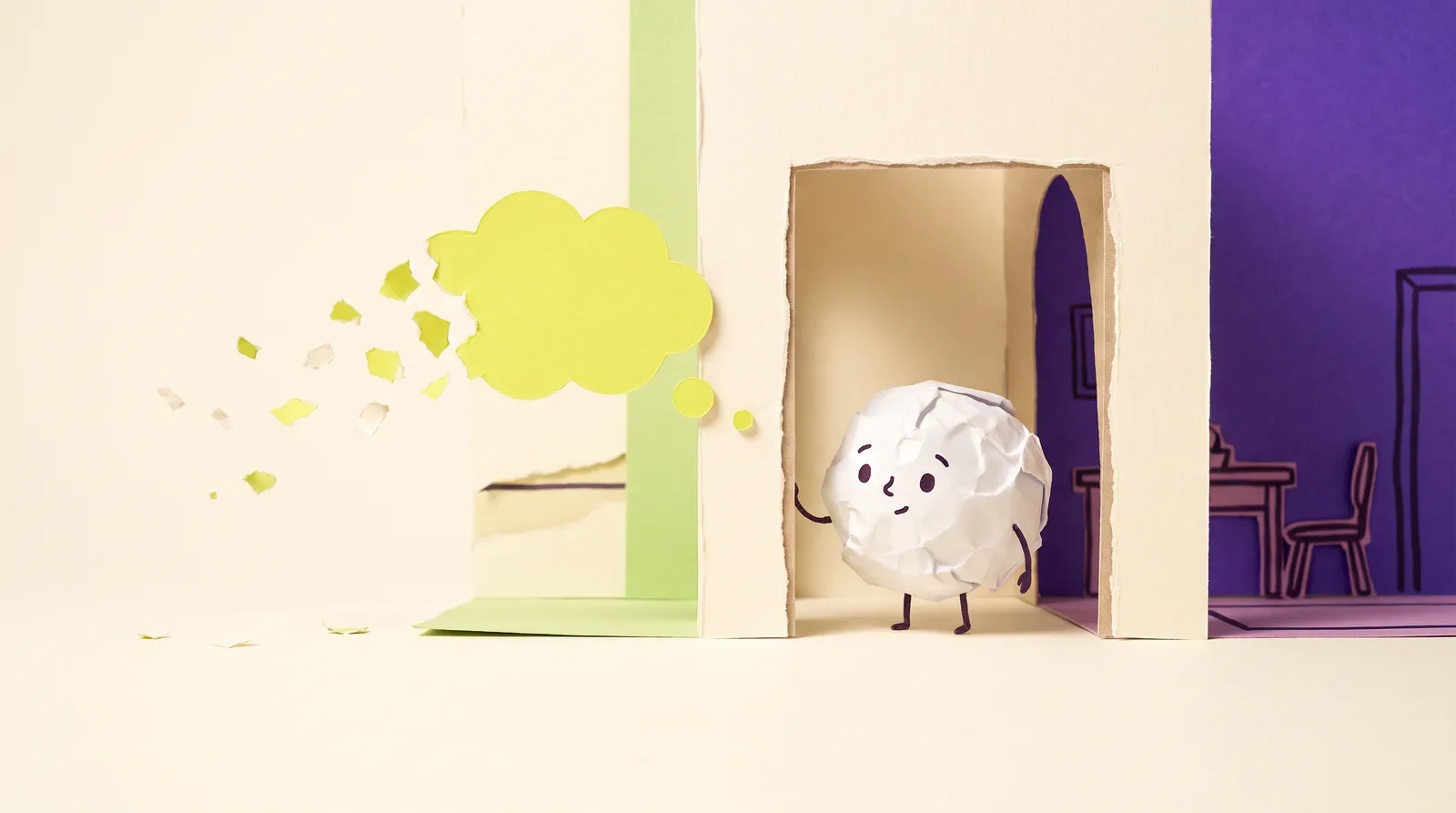
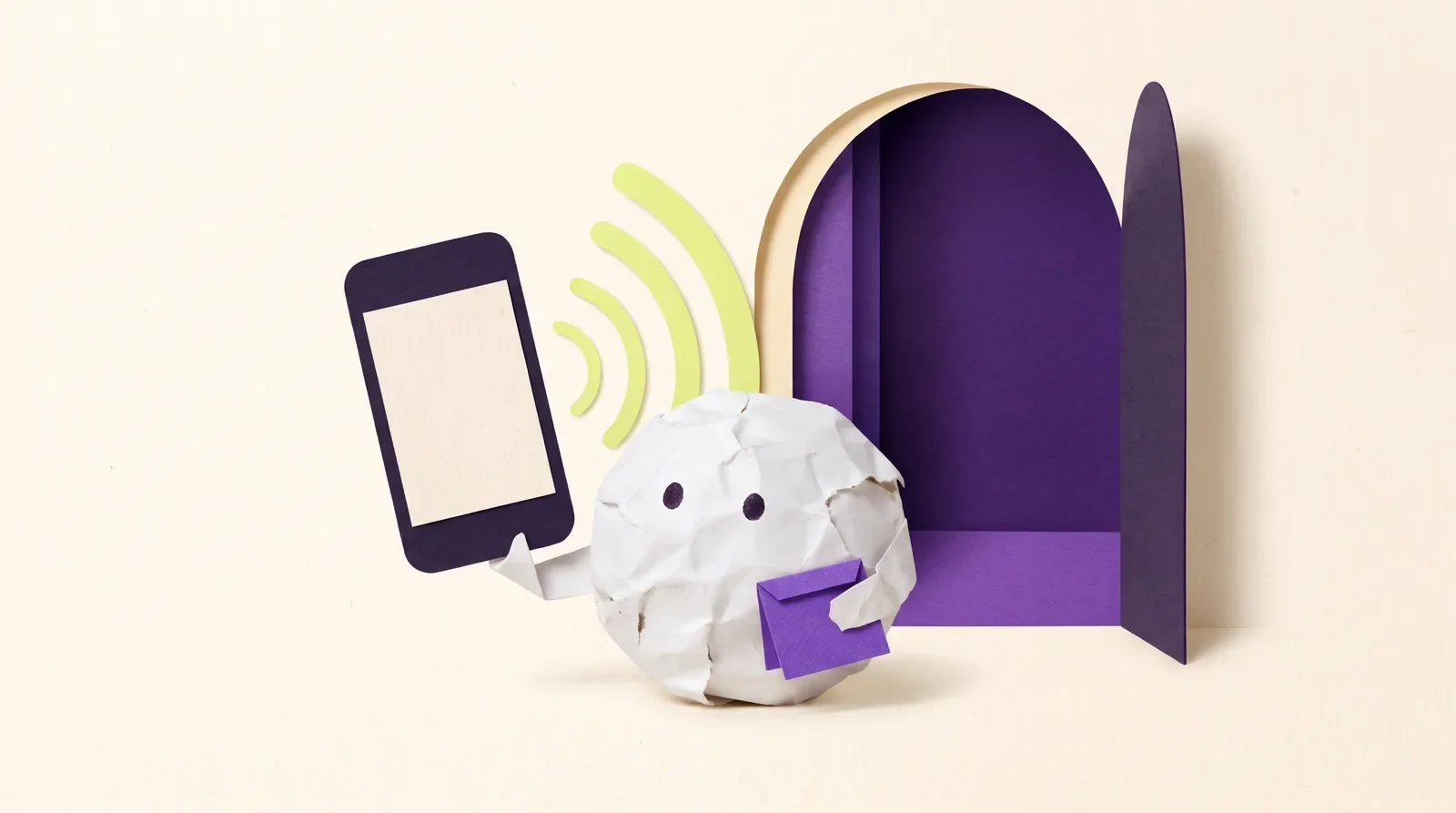
This video has no narration. Pip, the Spitball paper-ball character, hops across a cream paper room toward an open purple doorway with a glowing lime thought cloud above its head. As Pip steps through the doorway, the thought cloud breaks into small lime paper scraps that fall to the floor, and Pip looks around, puzzled. Next, Pip pauses beside a doorway and speaks into a plain phone shape while lime sound-wave arcs fold into a small purple paper note. Finally, Pip walks out of a purple paper room, the lime thought cloud floating back above its head, and the folded note drops to the floor. Captions: Lost your thought at the door? A new room can split one moment into two. Some studies found memory dips after a doorway. Others didn't. Before you move on, say the thought out loud. Save it somewhere outside your head. Then walk through.
You forget what you were going to say because the thought was only held in working memory, and something shifted your attention before you used it: a new room, an interruption or someone else talking. Lab studies suggest walking through a doorway can add to this, though not every study found it. Our suggestion: say it or save it first.
This guide covers the doorway effect and the mid-sentence blank: what the research found, where it didn't replicate, why going back to the room may not help, and what to do before and after you lose a thought. Spitball is our app, so where we mention it we've kept to what it actually does.
Research claims link to the original papers; we checked each one on October 31, 2026. The tips labeled as ours are suggestions built from those findings, not a tested program. For a full system for keeping ideas once you have them, see how to capture ideas before you forget them.
Why do you forget what you were about to say?
A thought you haven't said yet lives in working memory, the small, short-lived space you use to hold something in mind while you do something else. It holds only a few things at once, and it relies on attention to keep them there. When attention moves, the thought can slip.
Three kinds of shift come up again and again, two of them in lab research:
- A change of place. You stand up with a plan, walk into the kitchen and stop. Lab studies call the memory dip after moving to a new room the "location updating effect", better known as the doorway effect.
- An interruption. A notification, a question or a noise breaks in for a few seconds, and the next step of what you were thinking is gone.
- A conversation turn. You wait for someone else to finish, and by the time it's your turn, you're listening to them rather than holding your point. Brainstorming research calls the group version of this production blocking; see why groups lose ideas while waiting their turn.
None of this means something is wrong with your memory. It's the cost of a system built to follow whatever is in front of you. The rest of this guide looks at how strong each effect is, and at what you can do in the second or two before a shift.
What is the doorway effect?
The doorway effect is the finding, from a series of experiments led by psychologist Gabriel Radvansky, that people remember objects they've just handled less well after walking through a doorway into a new room than after walking the same distance within one room.
In the first study, participants moved through a virtual environment on a computer, picked up objects, carried them and set them down, and were asked about the objects either after crossing a doorway or after moving within the same room. Memory was worse after a doorway (Radvansky & Copeland, 2006, Memory & Cognition). A follow-up found the same pattern when the memory test used pictures of the objects instead of their names, and when people also had to hold word pairs in mind (Radvansky, Tamplin & Krawietz, 2010, Psychonomic Bulletin & Review).
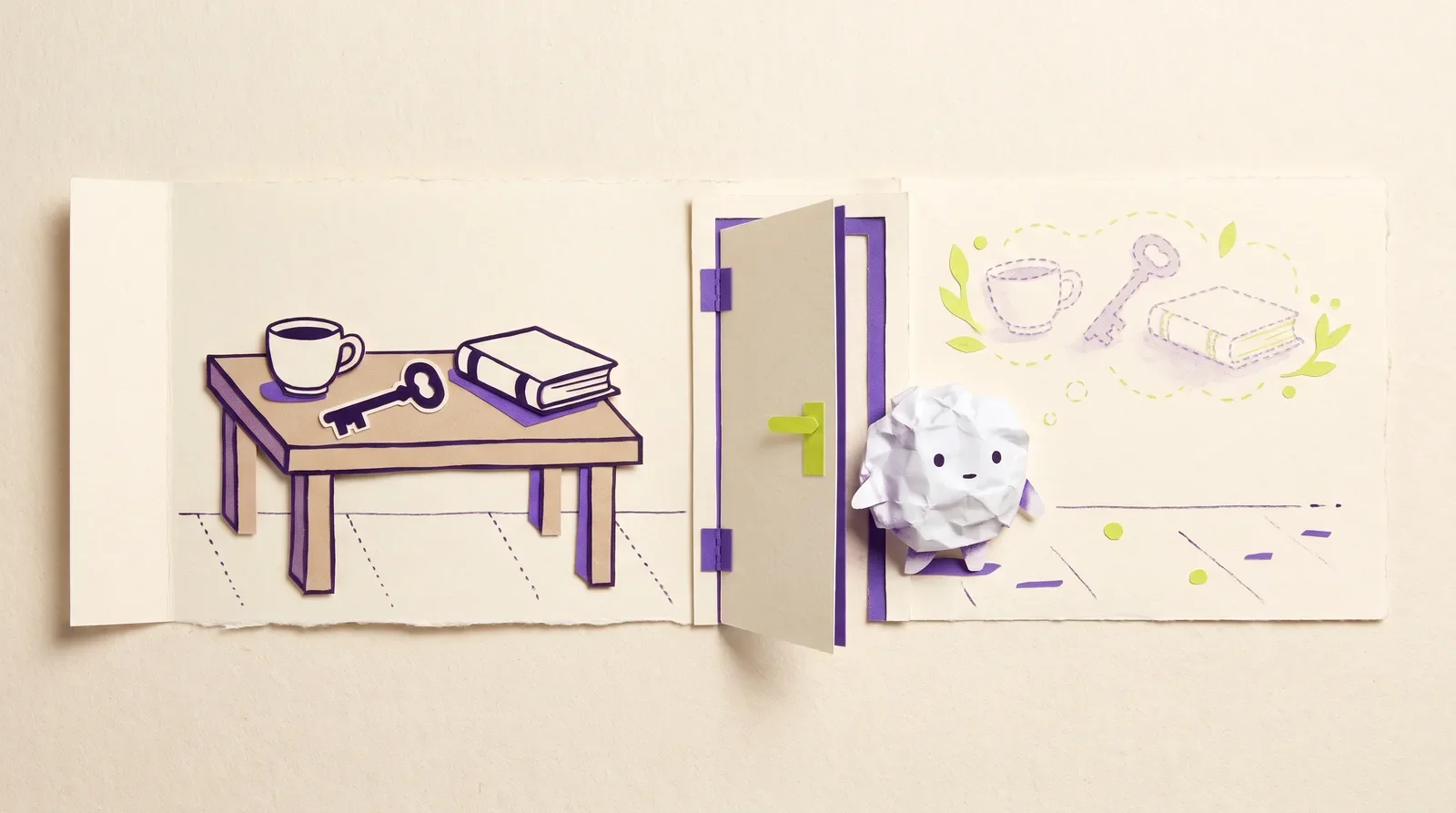
The explanation the researchers offer is the event horizon model. Your mind splits experience into events, and a doorway is a natural boundary. Crossing it closes one event and opens another. What you were doing in the old room gets filed with that old event, and now two event models compete when you try to recall it, which makes retrieval harder. In other words, the theory isn't that the doorway erases anything; it's that the boundary makes the thought harder to get back.
What did the doorway studies actually find?
The original lab, and a few others, tested the effect in several ways. Most of these studies used virtual rooms on a screen and asked about objects, not unspoken thoughts.
- Real rooms too. The effect appeared with smaller screens and in an actual building where people walked between real rooms (Radvansky, Krawietz & Tamplin, 2011, Quarterly Journal of Experimental Psychology).
- Not just extra time. Travel times were similar with and without a doorway, and adding a 3-second delay before the memory question didn't change the pattern. The authors concluded the dip wasn't explained by time passing or a brief disruption, but by interference between event models (Pettijohn & Radvansky, 2016, Quarterly Journal of Experimental Psychology).
- Even imagined doorways. After getting to know a real building and a virtual one, people imagined walking routes through them while holding an image in mind. More forgetting occurred when the imagined walk passed through a doorway than when it didn't (Lawrence & Peterson, 2016, Memory).
- Recollection, not familiarity. In virtual rooms, a change of location reduced answers people gave with a sense of actually remembering, but not answers based on a feeling of knowing (Seel, Easton, McGregor, Buckley & Eacott, 2019, British Journal of Psychology).
That's a consistent pattern within one style of task. But consistency within one lab's method isn't the same as a sure effect in your hallway, which brings us to the studies that didn't find it.
Does walking through a doorway really make you forget?
Sometimes, and the evidence is mixed. A 2021 team ran four experiments with a different design and didn't find the effect overall (McFadyen, Nolan, Pinocy, Buteri & Baumann, 2021, BMC Psychology):
- Virtual reality. In headset VR, 29 analyzed participants showed no significant doorway effect.
- VR with a mental load. When 45 analyzed students also had to count backwards, the main result still didn't show the effect. Under that load, though, people were more likely to say they'd seen an item they hadn't after passing a doorway, which the authors read as greater susceptibility to interference.
- Video and real walking. Watching first-person video of a walk (26 people) and walking a real hallway divided by curtains (26 people), both while counting backwards, also showed no significant effect.
The authors' conclusion is in their title: doorways do not always cause forgetting. They wrote that their results "call into question the generalisability and robustness" of the effect. The one sign of it, more false recognitions after a doorway, appeared only in the VR experiment with the counting task. Accuracy in the first VR experiment was near the ceiling, which can hide an effect, so the authors added the counting task to make the second one harder.
A second independent team got the same result. In a pre-registered virtual reality study, 36 analyzed participants collected objects and carried them either into another room or across the same room, walking or teleporting. A second experiment (20 people) tried five kinds of doorway, from a realistic door to a portal. Neither found a difference in memory for the objects, whether or not there was a doorway (van Gemert, Chew, Kalaitzoglou & Bergström, 2024, CHI Conference on Human Factors in Computing Systems).
There's also a twist from the original lab. In a 2026 replication attempt, the same research group tested whether learning a word list in two rooms rather than one helped memory, as their own earlier study had found (Pettijohn, Thompson, Tamplin, Krawietz & Radvansky, 2016, Cognition). Across two experiments there was little evidence it did. One experiment showed a benefit for words near the boundary, but it faded after a short delay (Crockett, Parra, Doolen & Radvansky, 2026, Memory & Cognition). Another of their 2026 studies found splitting a reading task into two events hurt memory for the exact wording and for what the text stated, but helped people's understanding of the situation it described (Crockett et al., 2026, Current Research in Behavioral Sciences). Boundaries reshape memory; they don't simply delete it.
Why do you lose your train of thought mid-sentence?
Interruptions are the better-tested explanation. In a lab study, people worked through a task that required them to keep their place in a sequence of steps. Interruptions averaging 4.4 seconds tripled the rate of sequence errors afterward, and interruptions averaging 2.8 seconds, about the time to do one step, doubled it. Other kinds of errors didn't rise, so people weren't generally distracted; they specifically lost their place (Altmann, Trafton & Hambrick, 2014, Journal of Experimental Psychology: General).
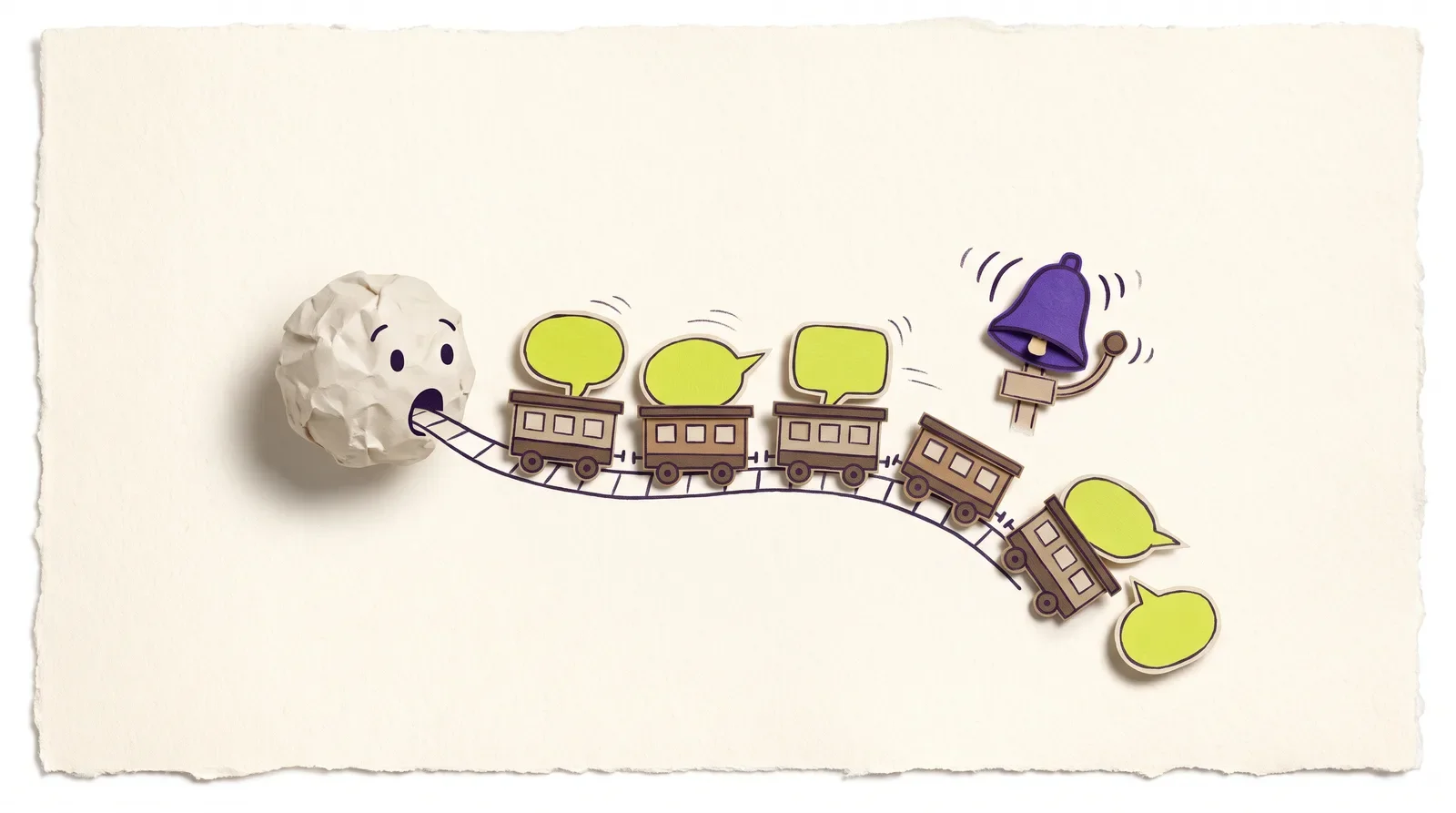
The authors' account fits what a mid-sentence blank feels like. While you're focused, each step activates the next one, like carriages pulling each other along. A short interruption moves your focus and cuts that chain, so you have to rebuild where you were.
That study used a computer task, not conversation, so applying it to speech is our inference. But it matches common situations: someone cuts in, your phone lights up, or you notice the listener's face and lose the next clause. The longer the side trip, the more there is to rebuild.
Is it the same as having a word on the tip of your tongue?
No. On the tip of the tongue, you know what you mean and you're missing a word. When you forget what you were going to say, the whole point is gone, and you might not even remember what it was about.
The tip-of-the-tongue state has been studied since a classic 1966 experiment in which students heard definitions of uncommon words read aloud. When they felt a word was on the tip of their tongue, they could often guess things about it, such as its first letter or how many syllables it had, before the word itself came back (Brown & McNeill, 1966, Journal of Verbal Learning and Verbal Behavior).
The difference matters for what you do next:
- Tip of the tongue: describe around the word, or say what it starts with, and carry on. The word often comes back later.
- Lost thought: go back to the last thing you clearly remember, or to what you were reacting to, and rebuild from there. The steps below cover this.
Does going back to the room help you remember?
Maybe not, at least in the doorway studies. In one experiment, people walked back into the room where they'd first seen the objects, and their memory was no better for it: returning to the original room didn't undo the dip (Radvansky, Krawietz & Tamplin, 2011, Quarterly Journal of Experimental Psychology).
Broader research on context and memory is more encouraging. A review and meta-analysis of environmental context effects found that people often recall more in the place where they learned something. It also found that the effect shrank when people mentally reinstated the original context, picturing where they had been, and when other cues were available (Smith & Vela, 2001, Psychonomic Bulletin & Review). Those studies mostly tested lists and material learned on purpose, not a passing thought.
Our suggestion is to retrace the thought rather than the room. Before walking back, try to reconstruct what you were doing when the thought appeared: what you were looking at, what you'd just read or who'd just spoken. It's quick, it costs nothing, and if it fails, the walk back is still there.
What helps you hold on to a thought?
The research points to two things you can do before the shift. Neither was tested on the doorway effect directly, so treat the plan as ours.
- Make an if-then plan. An implementation intention links a situation to an action: "if I pass the hall cupboard, then I'll grab the charger." A meta-analysis of 36 comparisons in prospective memory, remembering to do something later, found that these plans improved performance, with a medium effect in healthy young adults and a medium-to-large effect in older adults. They came with a small cost: people were slightly slower on the task they were doing at the time (Chen et al., 2015, Psychiatry Research).
- Get the thought out of your head. Working memory is fragile, but a spoken or written note isn't. The capture guide linked near the top covers the research on offloading thoughts.
Here's our threshold rule, built from those findings. Before you cross a boundary, such as standing up, opening a door, switching apps or letting someone else talk, take five seconds:
- Name it. Say the thought in a few words, out loud or under your breath.
- Tag it. If it's an errand, attach it to where you're going: "kitchen, scissors."
- Park it. If it's longer than a few words, save it before you move.
How do you get back a thought you just lost?
Once it's gone, these steps are our suggestions, ordered from quickest to slowest:
- Stop and stay put for a few seconds. Moving on to the next room or the next topic adds another boundary.
- Say the last thing you remember. In a conversation, "where was I?" works, and the other person often knows.
- Rebuild the trigger. Ask what you were reacting to: something you saw, a phrase someone used, a problem you were stuck on.
- Picture where you were. Mentally reinstating the original setting reduced context effects in the meta-analysis above.
- Let it go and set a cue. If it doesn't come back, a quick note such as "something about the trip budget" gives you a hook for later.
Thoughts often come back once you stop chasing them, especially when your attention is free, like in the shower or on a walk. That's a separate topic: see why ideas tend to surface when you step away.
When should you worry about forgetting?
Usually you shouldn't. The National Institute on Aging says, "It’s normal to forget things once in a while at any age". Forgetting why you walked into a room or losing your point after an interruption is a common experience. In one lab study, younger and older adults both showed a memory dip after virtual doorways, and the size of the dip was similar in the two groups (Radvansky, Pettijohn & Kim, 2015, Psychology and Aging).
If forgetting is new, frequent or worrying, or someone close to you has noticed a change, talk to a doctor. The National Institute on Aging's page on memory and aging lists signs that are worth discussing. This guide is about everyday lapses, not medical advice.
What doesn't the research show?
A few limits are worth keeping in mind:
- Mostly screens and objects. Most doorway studies used virtual rooms and asked about objects people carried, not unspoken thoughts or reasons for walking into a room.
- Mostly one lab. Many of the positive results come from the same research group, and two independent teams' replications didn't find the effect overall.
- Small samples. Several studies had a few dozen participants per experiment.
- Interruptions in a lab task. The interruption study measured errors in a computer task, not conversation.
- Plans tested elsewhere. The if-then meta-analysis covered prospective memory tasks, not doorways or mid-sentence blanks.
- No tested routine. We found no research showing that our threshold rule prevents the doorway effect.
The practical version: boundaries and interruptions can make a fresh thought harder to reach, so say it or save it before you move.
How can Spitball help you keep a thought?
Spitball, our iPhone app for capturing thoughts, is built for the "park it" step. Open the app and record the thought, up to 5 minutes long, before you stand up or switch tasks. On a compatible iPhone, you can set up an optional Action button shortcut: press and hold to begin, and press and hold again to finish and save. Setup is required; see how to record a voice memo with the Action button.
Spitball transcribes English on your iPhone, with no cloud transcription fallback. Results depend on your device, language and downloaded speech models, and transcripts can contain mistakes, so the original audio is kept. Your thought library stays on your iPhone by default. We don’t send your thoughts to our servers. Enable iCloud Sync in Settings if you want a copy in your own iCloud. No Spitball account is required; see the privacy page. For every way to record on iPhone, see our guide to voice notes on iPhone.
Spitball is free on the U.S. App Store for iPhone with iOS 17 or later. Get Spitball. Questions? See Spitball Support or DM Nik, Spitball's developer, at @sharma on Instagram.
A FEW MORE ANSWERS
Good questions.
Is the doorway effect real?
It's real in some lab conditions but not guaranteed. Several experiments, mostly in virtual rooms and largely from one research group, found people remembered recently handled objects less well after passing through a doorway. Two independent teams didn't find it: one ran four experiments in VR, on video and in a real hallway, and saw only more false recognitions in one VR experiment with a counting task; the other, a pre-registered VR study, found no difference in memory with or without a doorway.
Why do I forget what I was saying mid-sentence?
Usually because something pulled your attention away for a moment: an interruption, a question, a notification or the listener's reaction. In one lab study, interruptions of a few seconds doubled or tripled errors in keeping track of a sequence. Pausing, saying the last thing you remember or asking “where was I?” is often the fastest way back.
Does going back to the room help you remember?
Not in the doorway study that tested it: walking back into the room where people first saw the objects didn't improve their memory for them. A broader meta-analysis found that recalling in the original place often helps, but that picturing the original setting reduced the gap. As our suggestion, try retracing what you were doing in your head before walking back.
Is it normal to forget why you walked into a room?
Yes. It's a common experience, and the National Institute on Aging says it's normal to forget things once in a while at any age. Some lab studies suggest moving between rooms can make recent memories harder to retrieve right after the move. If forgetting is new, frequent or worrying, or others have noticed a change, talk to a doctor.
Is forgetting what you were going to say the same as tip of the tongue?
No. In a tip-of-the-tongue state you know what you mean and are missing a word, and you can often recall its first letter or number of syllables. When you forget what you were going to say, the whole idea is gone. For a lost word, describe around it and move on; for a lost thought, go back to what you were reacting to.
Does the doorway effect get worse with age?
One lab study tested younger and older adults in a virtual environment and found both groups had memory disrupted after walking through a doorway, with a similar size of disruption in each. That's a single study with a specific task, so it doesn't describe everyday memory in general. If you're concerned about changes in your memory, talk to a doctor.
How do I stop forgetting what I was about to say?
We suggest acting before the shift, since we found no research testing a routine for this. Say the thought in a few words before you stand up, switch tasks or let someone else talk, and if it's an errand, tie it to where you're going with an if-then plan. For anything longer than a few words, save it as a quick note or voice recording before you move.
WRITTEN BY
Nik Sharma
Nik is an entrepreneur, active investor, and the founder of Spitball. He writes about building businesses, practical AI, and catching ideas before they disappear.