 spitball
THE SHORT VERSION
What to take away
- Our suggestion: learn the melody first, then speak the words in rhythm, then sing them, one section at a time.
- Map the song: label sections, note the first word of every line and circle what changes between choruses.
- Test yourself from first-word cues, a write-out or a recorded cold run instead of listening on repeat.
- In one study, reviewing a song two days or a week later beat reviewing it 10 minutes later for remembering the words.
- Music isn't a sure memory aid: a repeating tune helped in one study, but singing cost words early in learning in another.
WATCH THE IDEA
Get a song's words to stick in four moves
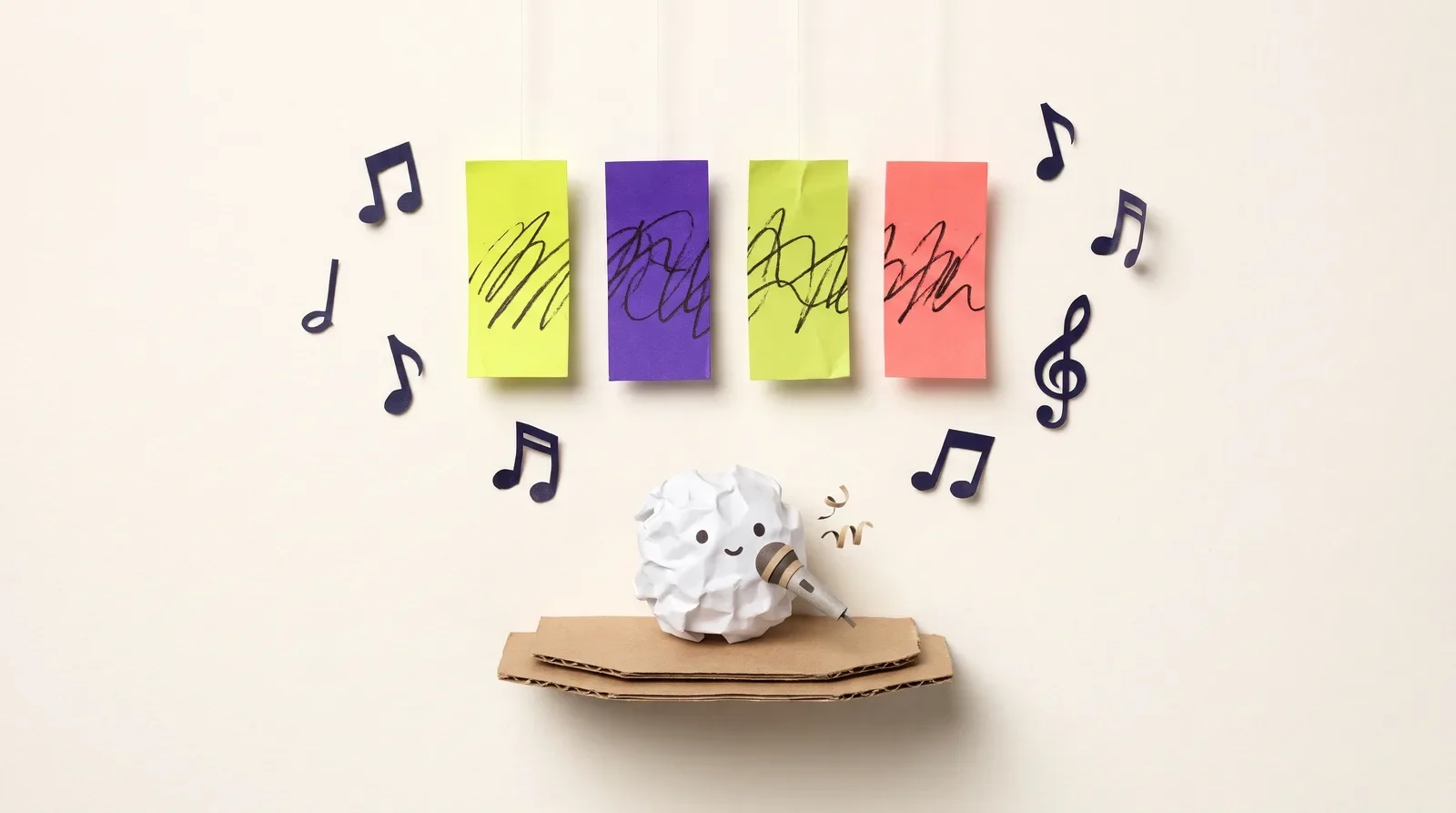
A short illustrated clip on memorizing song lyrics: split the song into sections, learn the tune before the words, cover the lyrics and sing from the first word of each line, then come back after a day or two and check a recorded run against the lyrics.
Read the video transcript
This video has no narration. Pip, the Spitball paper-ball character, cuts a long paper scroll into four short colored strips with paper scissors. Next, Pip walks along a cork board where a circle, a star, a circle and a triangle hang on a red string, as paper music notes pop up above them. Then Pip slides a lime card off a sheet of scribbled lines and sings as purple paper music notes rise. Finally, Pip, in a striped nightcap, stands beside a paper calendar as a paper sun and moon swap places and lime dots fill in more days. Captions: Learning a song's words by heart? Split the song into sections. Learn the tune first, then the words. Cover the lyrics and sing from each line's first word. Come back in a day or two. Record a run-through and check it against the lyrics.
To memorize song lyrics, learn the melody first, split the song into sections and learn one section at a time by singing it out loud. Then cover the lyrics and sing from the first word of each line. Come back a day or two later, and check a recording of yourself against the real lyrics.
This guide is for anyone who has to sing a song from memory: a choir piece, a cover for an open mic, a wedding song, a set for a gig, a song for an audition, or the setlist for a concert you're going to. It covers what research on learning songs actually found, including the studies where music didn't help, how to map a song, how to test yourself, how far apart to practice and a one-week plan. Spitball is our app, so where we mention it we've kept to what it actually does.
Research claims link to the original papers; we checked each one on October 30, 2026. The plan and the tips labeled as ours are suggestions built from those findings, not a tested program. If you're learning a speech rather than a song, see how to memorize a speech.
How do you memorize the lyrics to a song?
Here's the short version of the method this guide builds out, in the order we suggest:
- Get the right lyrics. Check the words against a reliable source, such as the artist's published lyrics or the sheet music, before you start. Misheard lines are much harder to fix once you've rehearsed them.
- Learn the tune. Listen until you can hum each section's melody without the recording.
- Map the song. Label the sections (verse, chorus, bridge) and note the first word of every line.
- Learn one section at a time. Speak the words in rhythm, then sing them, out loud.
- Test, don't just replay. Cover the lyrics and sing from the first-word cues, then check what you missed.
- Space it out. Return to the song a day or two later instead of drilling it all in one sitting.
- Record a full run-through. Sing without the sheet, then compare the recording with the lyrics, line by line.
The steps that matter most are testing and spacing. Listening to a song on repeat makes it feel familiar, but familiarity isn't the same as being able to produce the next line on your own, which is what you need on stage.
What does research say about memorizing song lyrics?
Less than you might expect, and not all of it says music helps. Most studies taught people an unfamiliar, simple song in a lab and then counted the words they recalled.
- Spacing helped the words. In one experiment, 87 university students, most recruited from a music skills class for music majors, learned an unaccompanied two-verse song until they could sing 95% of the words correctly. They were randomly assigned to review it 10 minutes later, two days later or one week later, then tested three weeks after the review. When cued with the song's first notes and words, both spaced groups remembered more of the words than the group that reviewed right away, and the two-day and one-week groups did about equally well. Cued by the notes alone, only the one-week group clearly beat the 10-minute group. The researchers didn't observe the same spacing benefit for the notes (Katz, Ando & Wiseheart, 2021, Cognitive Research: Principles and Implications).
- Singers tended to learn the tune first, then combine. In an observational study, 13 classically trained singers memorized the same new song over six 15-minute practice sessions. Most began by practicing the music separately from the words, then practiced the two together. Experienced professionals weren't necessarily faster or more accurate than students or amateurs; the faster, more accurate memorizers began memorizing earlier and were more likely to count beats aloud (Ginsborg, 2002, Psychology of Music). The study recorded what singers did; it didn't test whether that order works best.
- Learning words and tune together worked for expert singers. A later study had singers learn and memorize a new song's words and melody separately and together, then sing it unaccompanied from memory. Singers with more musical expertise gave more accurate, fluent performances than less expert singers, but only when they had memorized the words and melody together. The authors concluded that memorizing both together is an effective strategy, "but perhaps only for singers with high levels of musical expertise" (Ginsborg & Sloboda, 2007, Psychology of Music).
- A familiar tune helped later, not at first. In two experiments, people learned a list of names that they heard either spoken or sung to a familiar tune ("Pop Goes the Weasel", then "Yankee Doodle"). Singing didn't help initial learning, but people who had heard the sung version needed fewer trials to relearn the list a week later than people who had heard it spoken (Rainey & Larsen, 2002, Music Perception).
Does singing make lyrics easier to remember?
Not always. The results are mixed, and they depend on how the song is built and how fast the words go by.
- Melody helped only when it repeated. When people heard three verses sung to the same melody, they recalled the text better than people who heard it spoken. But when they heard a single sung verse, or a song with a different melody for each verse, the spoken version was recalled better (Wallace, 1994, Journal of Experimental Psychology: Learning, Memory, and Cognition).
- Some of the benefit may be pace. In a study of 78 undergraduates, sung lyrics were recalled better than spoken ones. In follow-up experiments where the presentation rate was matched so both versions took the same time, the advantage for singing disappeared. People with music training recalled more in every condition (Kilgour, Jakobson & Cuddy, 2000, Memory & Cognition).
- Singing can cost words early on. In a study of 36 students learning an unfamiliar song, participants recalled fewer words when they sang their answers than when they spoke them, and hearing the lyrics sung or spoken made no difference to recall. The authors suggest that singing is a dual task, at least in the first steps of learning (Racette & Peretz, 2007, Memory & Cognition). Musical training made little difference to performance in that study, unlike in Kilgour's.
- Singing helped with foreign phrases. Sixty adults were randomly assigned to learn Hungarian phrases by speaking, rhythmic speaking or singing. After a 15-minute learning period, the singing group did better than both other groups on the tests that asked them to recall and say the phrases (Ludke, Ferreira & Overy, 2014, Memory & Cognition).
So "music helps memory" is too simple. A repeating tune can give words a structure to hang on, a slower pace gives you more time with each line, and spacing helps over weeks. None of these studies tested the routine in this guide, so treat it as an application of the findings, not a tested result.
Should you learn the melody or the words first?
We suggest the melody first. In Wallace's experiments, the tune helped people recall the text when it repeated across verses and was easy to learn, and hurt when it didn't. A melody you're still working out is one more thing to learn, not a scaffold.
The Racette and Peretz study points the same way. Early in learning, singing and recalling words at once cost people words. So split the job:
- Tune: listen to one section several times, then hum or "la" it without the recording until it's steady.
- Words in rhythm: speak the lyrics slowly in the song's rhythm, tapping the beat if it helps. Kilgour's study suggests a slower pace may be part of why sung words stick, and speaking lets you work on the words without also holding the pitch.
- Together: sing the section slowly, then at full speed.
Melody first, then words, then both is our suggestion. It matches how most singers in Ginsborg's observational study worked, but that study didn't test whether the order helps. The one study we found that compared memorizing a song's words and melody separately with memorizing them together concluded that learning them together is an effective strategy, perhaps only for singers with a lot of musical expertise (Ginsborg & Sloboda, 2007). So if you read music or sing often, try putting words and tune together as soon as the melody feels steady. If you already know the tune well, as with a song you've heard for years, skip straight to the words.
How do you break a song into sections?
Songs are easier to split than speeches, because the music already marks where each section starts and stops. Make a one-page map before you start rehearsing:
- Label the sections in order: intro, verse 1, pre-chorus, chorus, verse 2, chorus, bridge, final chorus, or whatever the song actually does.
- Write the first word of every line next to each section. That list becomes your test sheet later.
- Mark what changes. Repeated choruses often aren't identical. A changed word in the last chorus, an extra line or a repeated tag at the end is exactly where people slip, so circle it.
- Note the transitions. Write down how each section ends and what comes next, such as "chorus ends on 'home', then verse 2."
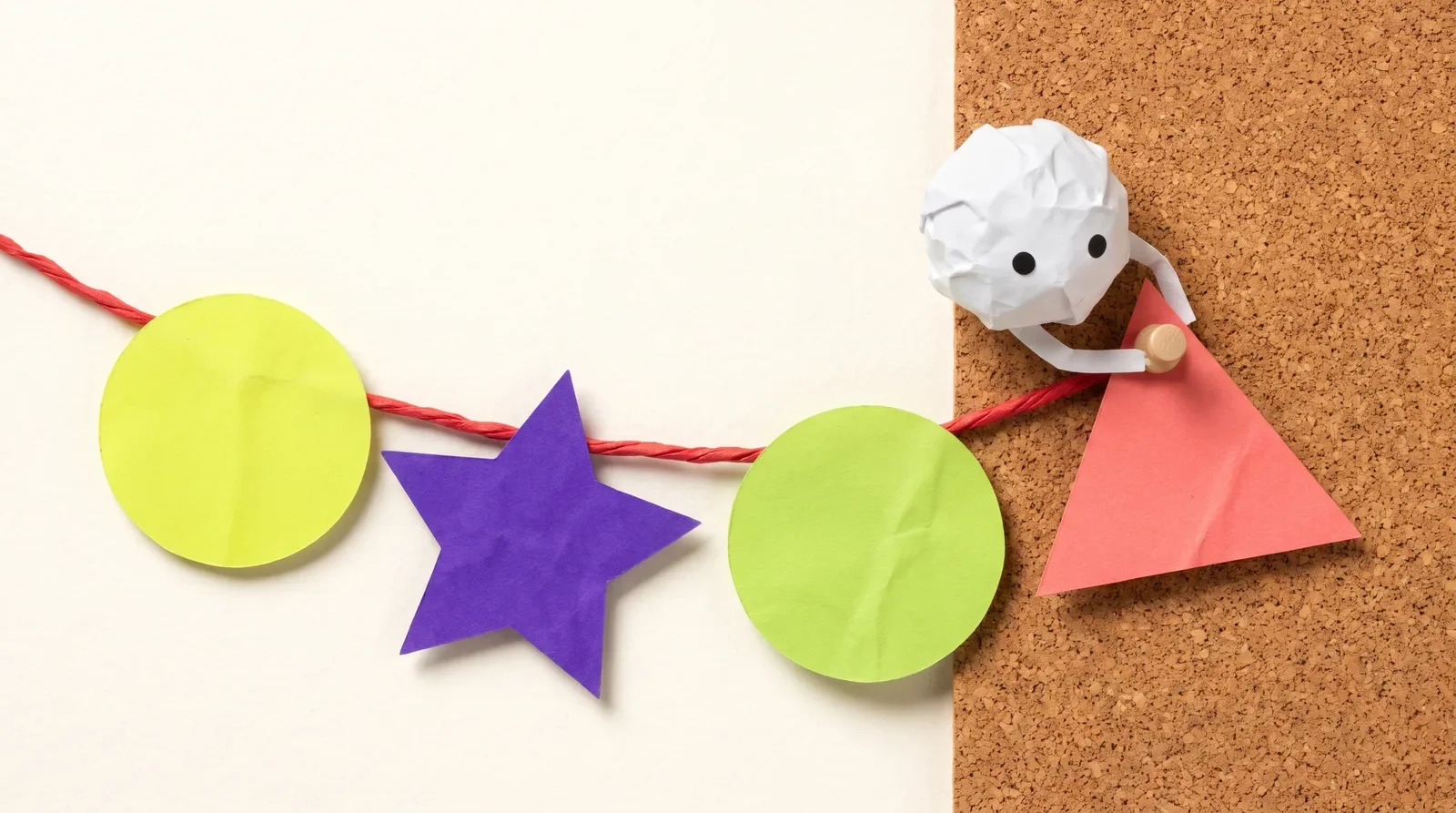
Learn the chorus first. It usually repeats several times, so it's the quickest win and it gives you somewhere to land if you lose your place later. Then learn the verses in order, one per session if the song is long, and the bridge last. Our speech guide, linked above, covers chunking a script in more depth, including how big a chunk should be; the same idea applies here, with the music doing most of the dividing for you.
How do you stop mixing up the verses?
Verses get confused for a simple reason: they often share the same melody. A repeating tune is what helped recall in Wallace's study, but it can't tell you which verse you're in. You need a cue that comes from the words.
Here's what we suggest:
- Find the story. Write one short line saying what happens in each verse: "verse 1, leaving town; verse 2, the phone call; verse 3, coming back." Many songs move through time or argument, and the order of events cues the order of verses.
- Pick a hook word per verse. Choose one vivid word from each verse and learn the hook words in order.
- Drill the joins. Practice the last line of the chorus straight into the first line of the next verse, several times. The join is where a wrong turn happens.
- Start in random places. Once you know the song, have a friend call out a section, or shuffle your section cards, and start singing from there. If you can only get to verse 2 by singing verse 1, you don't know verse 2 yet.
If two verses are nearly identical, list the words that differ and learn those as a set. That short list is often all that separates them.
Should you sing the lyrics out loud or practice in your head?
Out loud, whenever you can. You'll perform the song out loud, so rehearse the version you'll need. Lab research has also found that words people say aloud are often remembered better than words they read silently, a finding known as the production effect; we cover that research and its limits in what the research says about thinking out loud. Those were mostly word-list studies, not songs, and the advantage is clearest when some words are said aloud and others aren't.
Singing out loud also shows you where your breath and the words don't line up, which silent run-throughs hide. That's a practical reason, not a research finding.
Two exceptions:
- When singing makes you lose words. Early on, speak the lyrics in rhythm instead. In the Racette and Peretz study, people recalled more words speaking than singing during learning.
- When you can't make noise. On a train or at a desk, mouth the words or run through your first-word list in your head. It's better than nothing, and you can do the out-loud version later.
How do you test yourself on song lyrics?
Cover the lyrics and try to produce them. Recalling something from memory, rather than rereading it, is one of the better-supported ways to make it last; we cover that research, known as retrieval practice, in how to remember what you read. Those studies used prose and word lists, not songs, so treat this as an application.
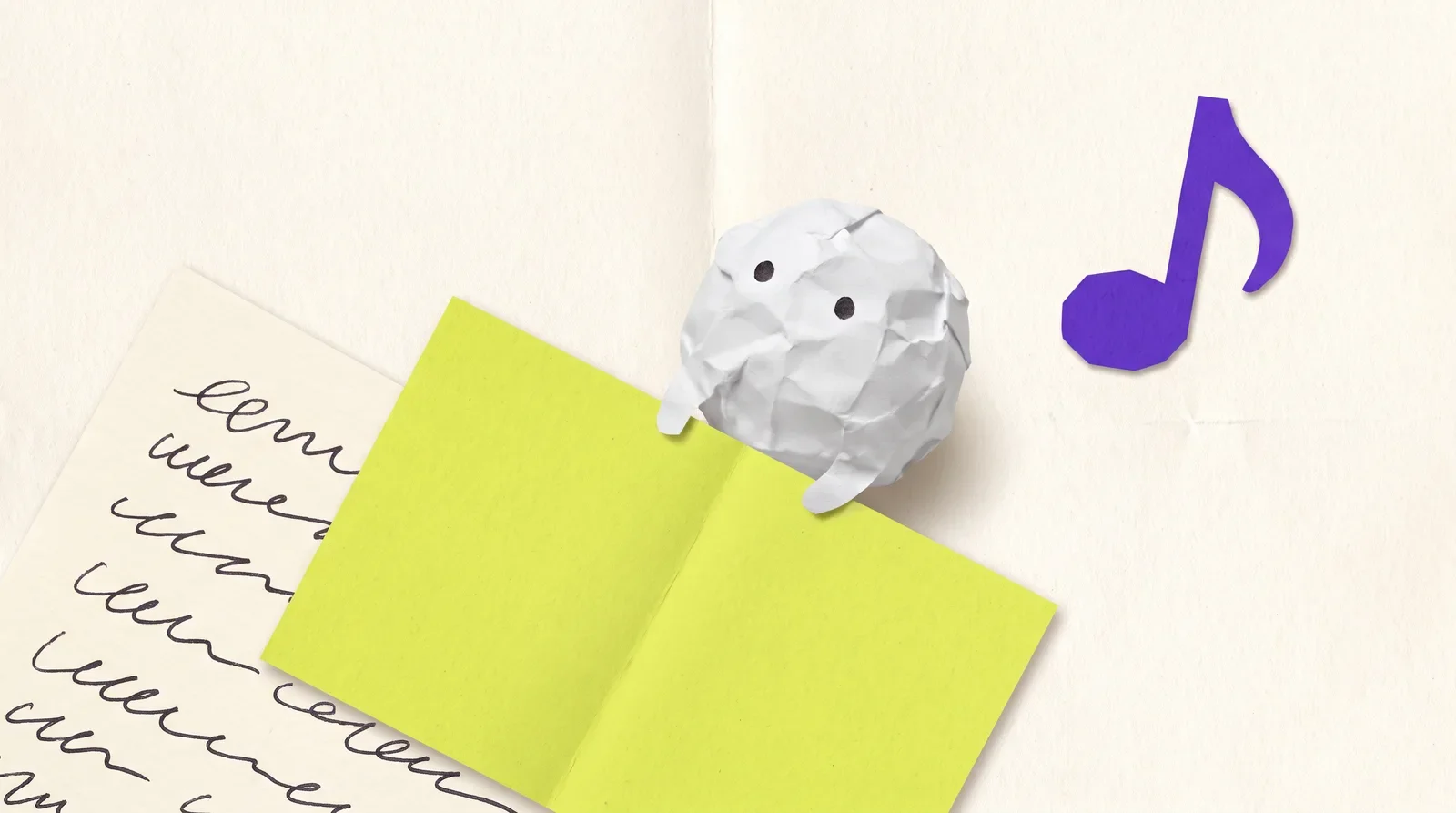
Ways to test yourself, from easiest to hardest:
- First-word cues. Look only at your list of first words and sing each line from its cue.
- Sing with the vocals turned down. If you subscribe to Apple Music, Apple Music Sing lets you lower a song's vocals with a slider while time-synced lyrics play, on iPhone 11 or later or iPhone SE (3rd generation). It works only on songs that support it; Apple says the Mic button doesn't appear if Sing isn't available for that song (Apple Support: How to use Apple Music Sing). Hide the lyrics to make it a real test.
- Write it out. Write the whole song from memory, then check it against the real lyrics and mark every miss.
- Record a cold run. Sing the song start to finish with no sheet, record it, then follow along with the lyrics while you play it back.
After each test, practice only the lines you missed, then test the whole song again. Testing tells you where to spend your time.
How far apart should you practice a song?
Leave at least a day between sessions on the same song when you have the time. In the Katz study, a review two days or one week after first learning the song led to better memory for the words three weeks later than a review just 10 minutes later. The two spaced groups did about equally well, so you don't need a precise interval, just a real gap.
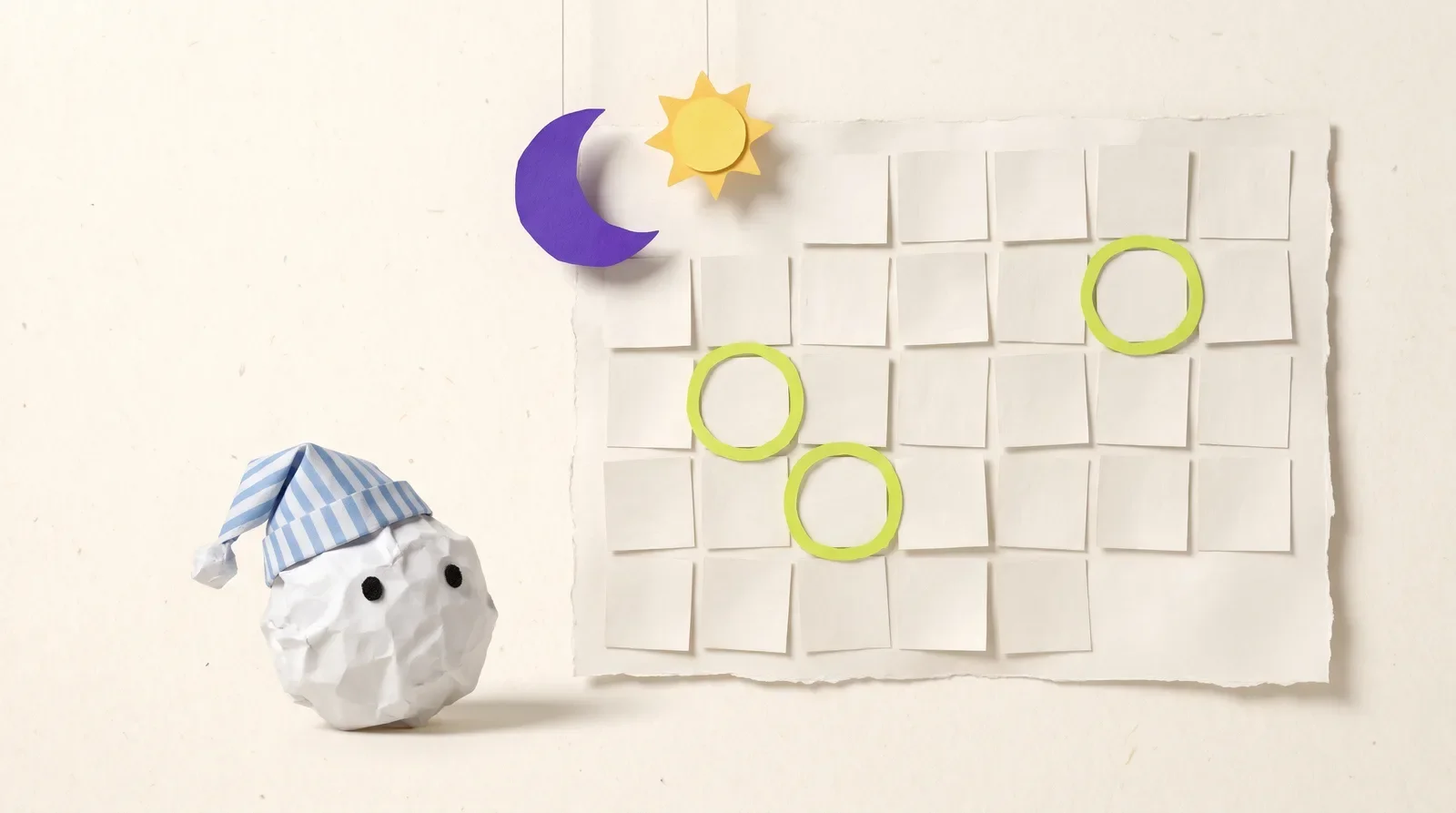
The study tested one review session and one final test. Here's how we'd apply it:
- A week or more away: learn the song across the first few days, then come back to it every couple of days with a test, not a relisten.
- A few days away: one session a day, each starting with a test of what you learned the day before.
- Several songs for a set: rotate through them rather than finishing one before starting the next, so each song gets gaps between sessions.
Sleep between sessions may help too. Our speech guide covers what research suggests about rehearsing in the evening and again the next morning; that research used vocabulary, not songs.
What does a one-week plan to memorize a song look like?
Here's a seven-day plan we suggest for a song of three or four minutes. It's built from the findings above, not tested as a program, so adjust it to the song and to how fast you learn.
- Day 1: check the lyrics, map the song and learn the melody of every section by humming.
- Day 2: learn the chorus and verse 1. Speak in rhythm first, then sing. End with a first-word test.
- Day 3: test the chorus and verse 1 without looking. Then learn verse 2 and the bridge.
- Day 4: test the whole song from first-word cues. Write out any section you stumbled on.
- Day 5: record a cold run, check it against the lyrics and drill only the missed lines.
- Day 6: start from random sections. Sing along with the vocals turned down, or with an instrumental version if you have one.
- Day 7 or show day: one or two full run-throughs with no sheet, at performance tempo.
Sessions can be short, 15 to 20 minutes is often enough, as long as each one includes a test. If you have two weeks, spread the same steps out and repeat days 5 and 6.
Can you memorize lyrics in one day?
Often, yes, well enough for one performance that evening, especially for a short song with a repeating chorus. In the Katz study, most participants learned a two-verse song to 95% word accuracy in a single session of up to 45 minutes, with one-on-one coaching if they needed it; 13 who couldn't didn't continue in the study. The catch is keeping it: the group that reviewed right away remembered fewer words three weeks later than the groups that waited.
If one day is all you have, here's what we suggest:
- Several short sessions, morning, afternoon and early evening, instead of one long one. We found no research testing gaps of a few hours for song lyrics. The closest study taught short melodies from familiar songs on piano and found no benefit from gaps of up to 15 minutes, on a test 5 minutes later (Wiseheart, D'Souza & Chae, 2017, PLOS ONE). So treat this one as our suggestion. It costs nothing to try.
- Test from the first session. Don't spend the day listening; spend it singing from cues.
- Prioritize the chorus and the joins. If you'll be nervous, those are what keep the song moving.
- Keep a cue card of first words where you're allowed to, such as on a music stand.
Then plan to revisit the song in the days after if you'll need it again.
What should you do if you forget the lyrics while performing?
Keep the music going. An audience is far more likely to notice a stopped song than a changed word. Here's a recovery routine we suggest rehearsing in advance, so it's automatic on the day:
- Stay in rhythm. Hum, sing a vowel or repeat the last line you know until the next line comes back.
- Jump to the next landmark. Skip to the next line you're sure of, or to the chorus. This is why learning the chorus first pays off.
- Use your cue. If you have a first-word card or a lyric sheet on a stand, glance at it and carry on.
Practice it on purpose. During a run-through, stop yourself mid-line, count two beats and pick up at the next line or chorus. Recovering is a skill you can rehearse like any other part of the song.
What doesn't the research show?
A few limits are worth keeping in mind:
- Simple, unfamiliar songs. The studies taught short songs or texts in a lab, mostly to university students. Long songs, fast lyrics and real setlists weren't tested.
- Music isn't a guaranteed memory aid. A repeating melody helped in one study, a non-repeating one hurt, the advantage disappeared when pace was matched in another, singing cost words early in learning in a third, and a familiar tune helped people relearn a list of names a week later but not learn it the first time in a fourth.
- Learning order is barely tested. One observational study recorded the order singers used, and one study found that learning words and tune together worked well mainly for the more expert singers. We found no experiment testing melody-first for beginners.
- Spacing was tested for words. The song study found a spacing benefit for the lyrics, not for the notes.
- Foreign phrases aren't songs. The Hungarian study tested short phrases after a 15-minute learning period, not lyrics over weeks.
- Performance wasn't measured. None of these studies measured stage nerves, how a performance sounded to an audience or this guide's routine.
- Saying words aloud and self-testing were studied mostly with word lists and prose, as noted above.
The practical version: learn the tune, test yourself instead of relistening, and give the song a gap or two before the day.
How can Spitball help you learn lyrics?
Spitball, our iPhone app for capturing thoughts, works for the record-and-check steps. Record each section as its own thought, up to 5 minutes long, and replay it while you learn. On test days, record a cold run-through and play it back against the lyric sheet. On a compatible iPhone, you can set up an optional Action button shortcut: press and hold to begin, and press and hold again to finish and save. Setup is required; see how to record a voice memo with the Action button.
Spitball doesn't show lyrics, play backing tracks or score your pitch. It transcribes English on your iPhone, with no cloud transcription fallback, and keeps the original audio. Transcription is built for speech, so sung lyrics often won't come out as clean text: check your words against the lyric sheet, not the transcript. If you want to find a take later, say the song and section name before you start singing. For capturing your own song ideas rather than learning someone else's, see how to record song ideas on iPhone.
Your thought library stays on your iPhone by default. We don’t send your thoughts to our servers. Enable iCloud Sync in Settings if you want a copy in your own iCloud. No Spitball account is required; see the privacy page. For every way to record on iPhone, see our guide to voice notes on iPhone.
Spitball is free on the U.S. App Store for iPhone with iOS 17 or later. Get Spitball. Questions? See Spitball Support or DM Nik, Spitball's developer, at @sharma on Instagram.
A FEW MORE ANSWERS
Good questions.
How do you memorize lyrics fast?
We suggest learning the melody first, then working one section at a time: speak the words in rhythm, sing them, then cover the lyrics and sing from the first word of each line. Start with the chorus, since it repeats. Test yourself instead of listening on repeat, and fit in at least one session after a break or a night's sleep if you can.
Can you memorize a song in one day?
Often, for a short song you need to perform that day. In one study, most university students learned a short two-verse song to 95% word accuracy in one session of up to 45 minutes, with coaching if they needed it. Spread the day into several short sessions, test yourself from the start and focus on the chorus and the joins between sections. Expect to forget more later than if you'd spaced your practice over days.
Is it easier to memorize lyrics by singing or speaking them?
It depends. In one study, text sung to a repeating melody was recalled better than spoken text, but a single sung verse or a melody that changed each verse did worse. Another found no advantage for singing once both versions were presented at the same pace, and a third found people recalled fewer words while singing early in learning. We suggest getting the tune steady before adding the words, so you aren't learning both at once, though one study found learning words and tune together worked well for the most musically expert singers.
Does listening to a song on repeat help you memorize it?
It helps you learn the melody and makes the song feel familiar, but we found no research showing that listening alone is enough to learn the lyrics. Research on retrieval practice, mostly with prose and word lists, found that recalling material beats rereading it. Use listening to learn the tune, then switch to singing from cues without the lyrics.
How long does it take to memorize a song?
There's no research-based number, because it depends on the song's length, how repetitive it is and how familiar you already are with it. As our suggestion, plan about a week of short daily sessions for a three- or four-minute song you need to perform reliably, with a recorded cold run near the end.
Why do I keep forgetting song lyrics?
Common reasons are learning by listening rather than testing, cramming in one session, and verses that share a melody, so the tune can't tell you which verse comes next. Map the song, learn a story or hook word for each verse, drill the transitions and practice starting from random sections.
How do you memorize lyrics for a performance?
Start a week or more ahead if you can. Check the lyrics, learn the melody, then learn the chorus and each verse separately, testing from first-word cues. Space sessions across days, record a cold run and check it against the lyrics, and rehearse a recovery routine for blanking, such as humming in rhythm and jumping to the chorus.
How do you memorize lyrics before a concert?
Use the same steps in a lighter form. Check the official lyrics, then prioritize the choruses and the songs you care most about. Test yourself from the first word of each line instead of only playing the setlist on repeat. Start a few days ahead so you get a gap or two between sessions. If you subscribe to Apple Music, Apple Music Sing can turn the vocals down on supported songs so you can practice singing over the track.

WRITTEN BY
Nik Sharma
Nik is an entrepreneur, active investor, and the founder of Spitball. He writes about building businesses, practical AI, and catching ideas before they disappear.