 spitball
THE SHORT VERSION
What to take away
- When you talk, you hear your voice through the air and as vibration through your head; a recording captures only the air part.
- Bone conduction is usually said to make your voice sound lower to you, but one study found no single filter matched everyone's own voice; a 2026 preprint disagrees and found it imagined as brighter.
- Hearing your recorded voice can be uncomfortable, and 1960s studies suggest the reaction isn't only about the sound.
- In two studies, people rated their own recorded voice as more attractive than other raters did; a larger Japanese study found no such boost.
- Our suggestion: record a minute of ordinary talk a few times a week, use the same setup, and listen for one thing.
WATCH THE IDEA
Get used to your recorded voice in four moves
A short illustrated clip on why your voice sounds different on a recording: you normally hear yourself through the air and through vibration in your head, while a microphone captures only the air part. It ends with our suggestion for getting used to it: short, regular listening with one goal.
Read the video transcript
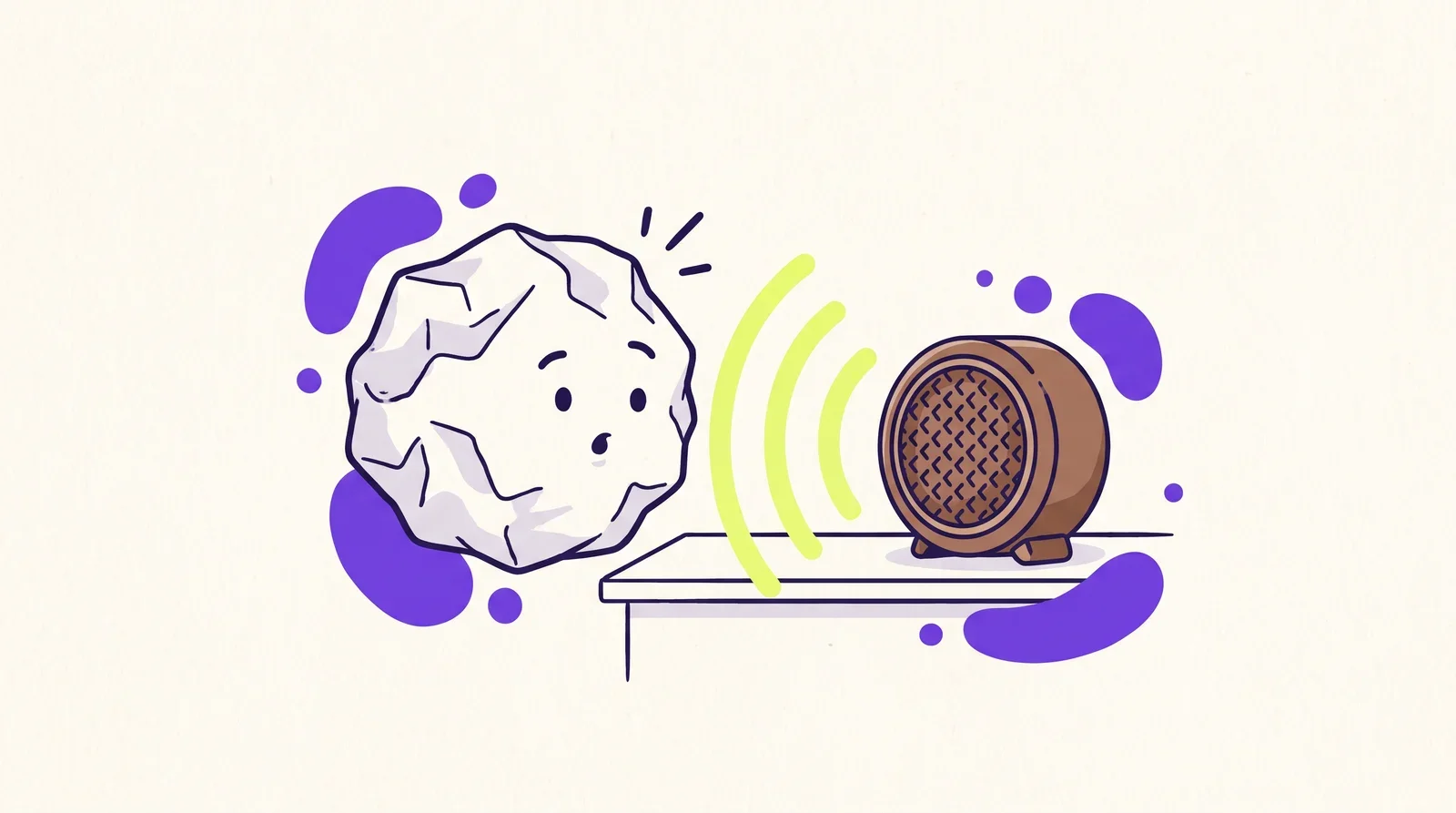
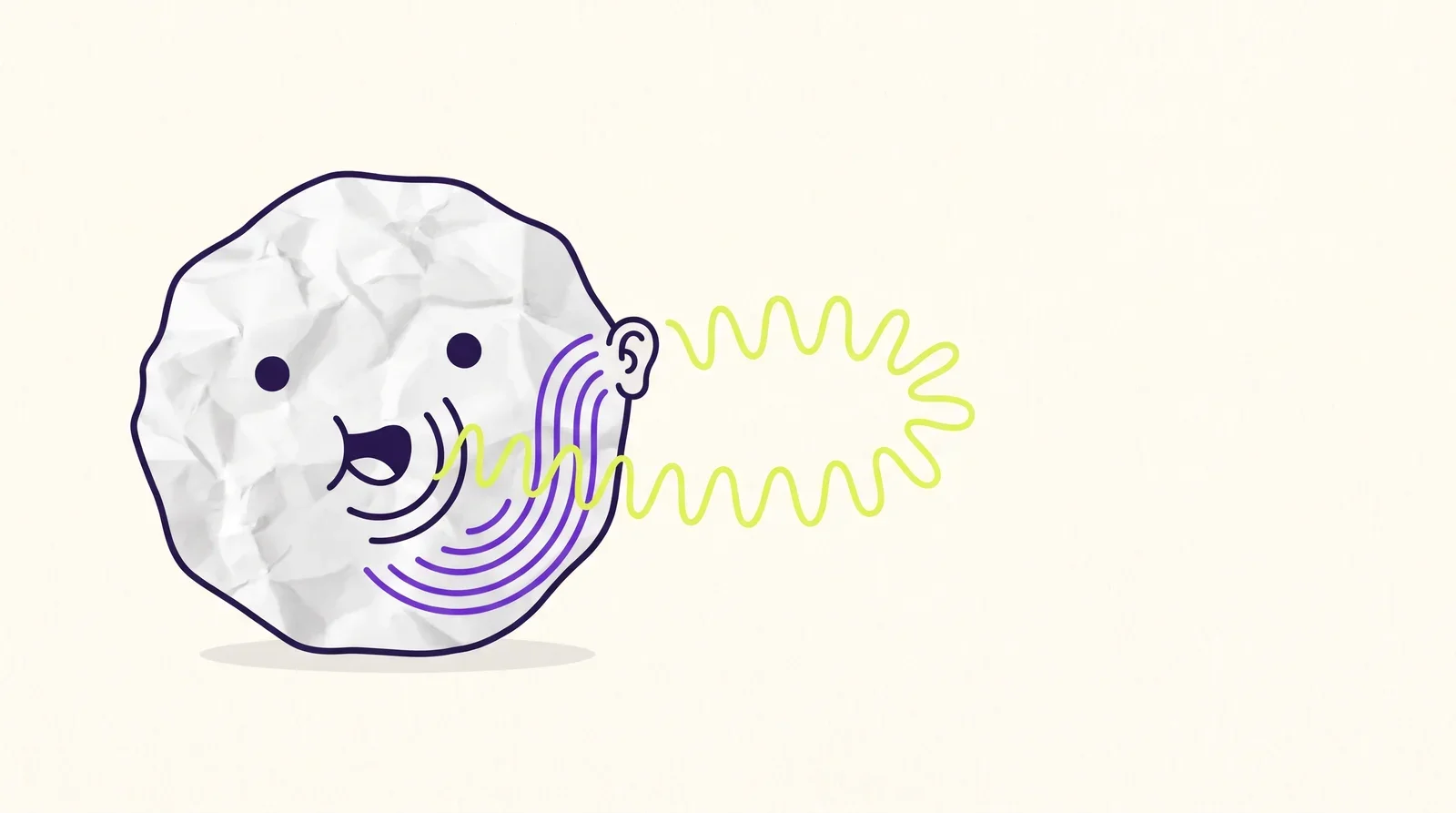
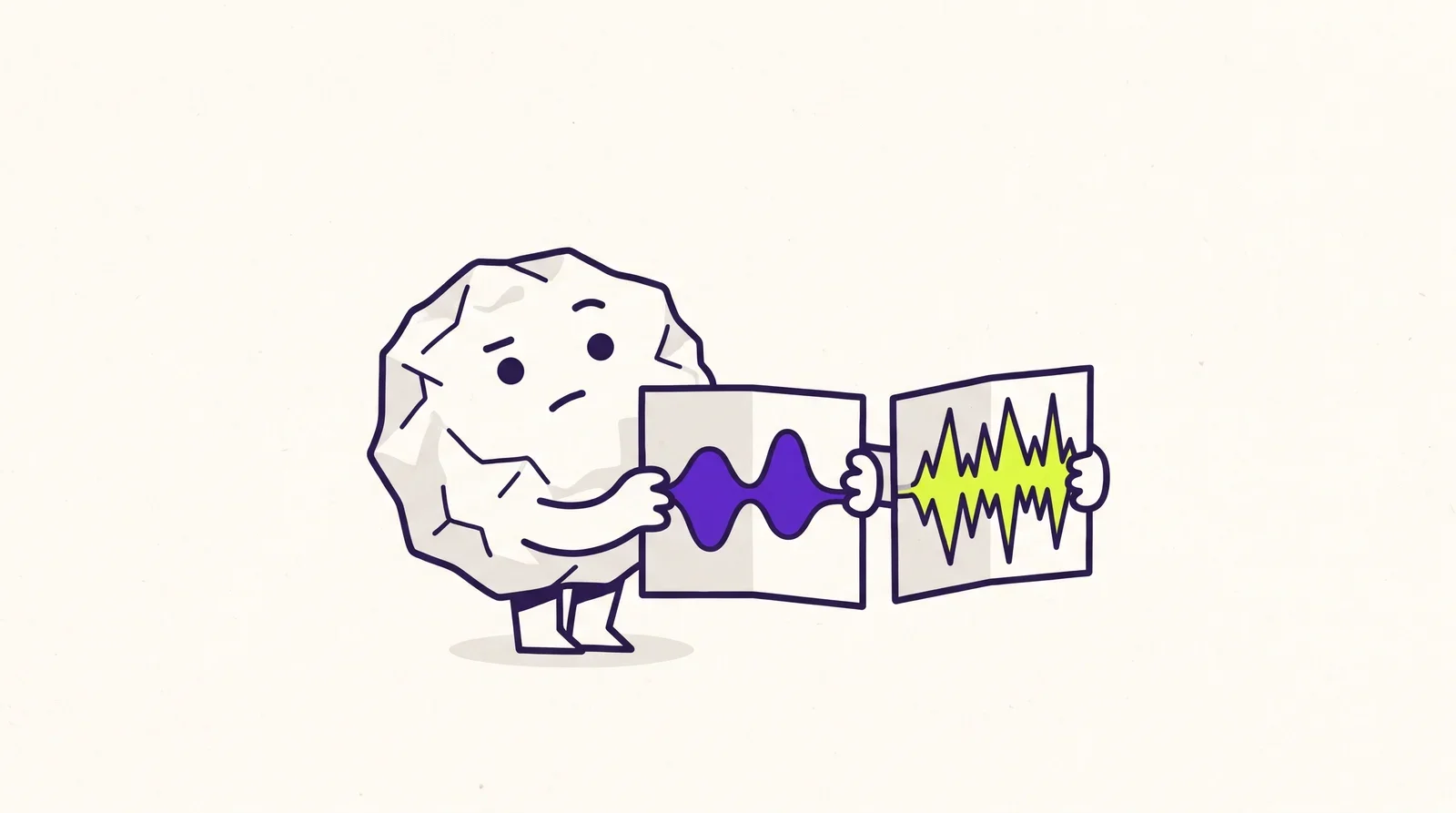
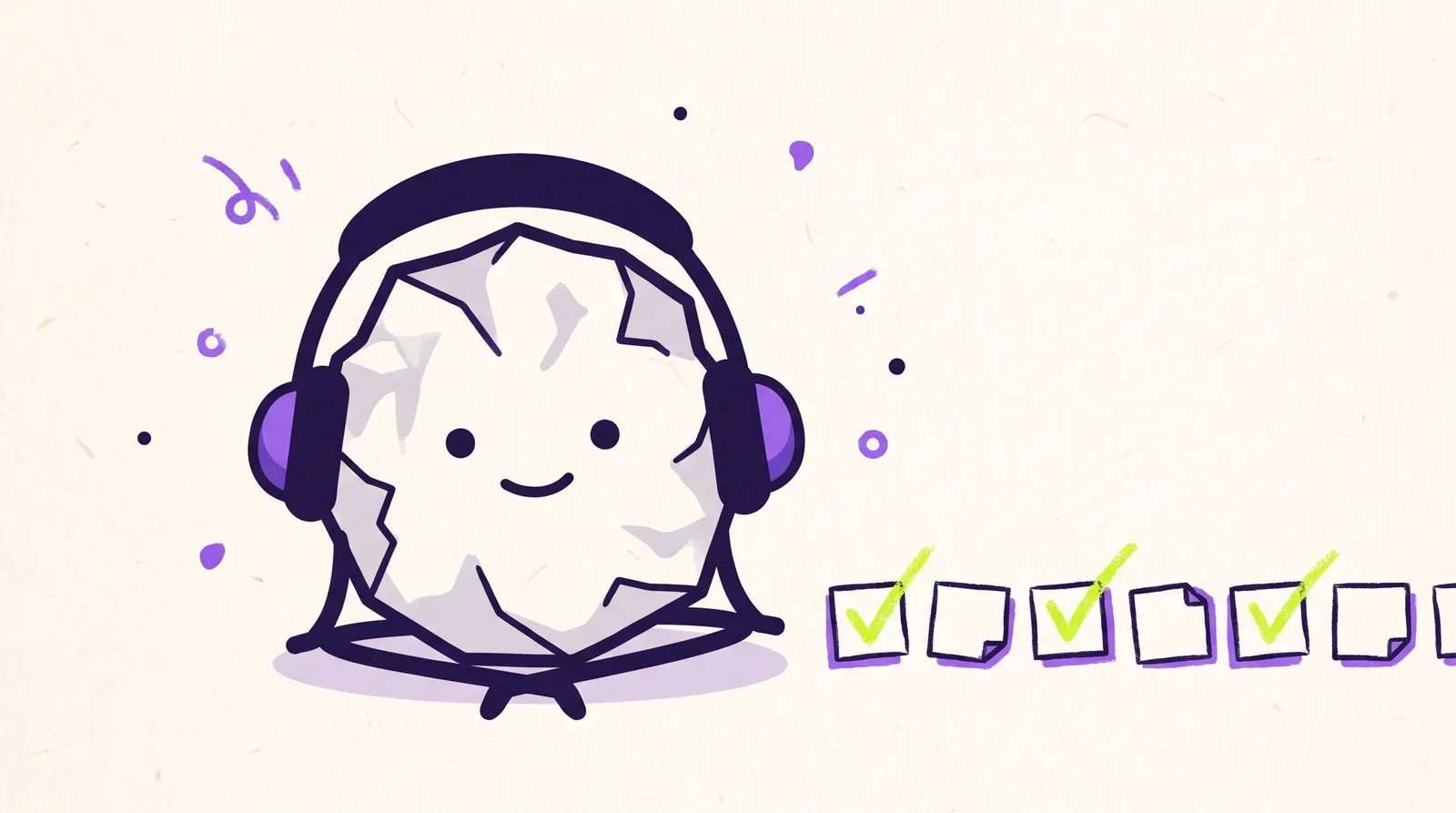
This video has no narration. Pip, the Spitball paper-ball character, talks while lime sound waves drift through the air to its ears and purple ripples pass through its body. Next, Pip stands beside a small speaker, hears its own recorded voice and squints in surprise. Then Pip relaxes in over-ear headphones, eyes closed, as small paper scraps float around. Finally, Pip looks at a row of paper squares as lime check marks fill them in one by one. Captions: You hear your voice through air and through your head. A recording only catches the air part. So it can sound strange to you at first. Listen in short, regular sessions with good headphones. Pick one thing to listen for each time. Give it a few weeks and see how it feels.
Your voice sounds different on a recording because, when you talk, you hear it two ways at once: through the air and as vibration through your own head. A microphone picks up only the air part, which is close to what other people hear. No study we found has tested whether practice makes it feel less strange, but our suggestion is short, regular listening with one goal.
This guide explains why your recorded voice sounds unfamiliar, why hearing it can feel so uncomfortable, where the usual "it sounds deeper in your head" explanation falls short, and how to get used to hearing yourself. Spitball is our app, so where we mention it we've kept to what it actually does.
Research claims link to the original papers; we checked each one on November 1, 2026. Most of these studies are small, so we've given the sample sizes where the papers report them. Tips labeled as ours are suggestions, not a tested program.
Why does your voice sound different on a recording?
When someone else talks, their voice reaches you one way: as sound waves travelling through the air into your ears. When you talk, you get that air-conducted sound too, plus a second channel. Your vocal folds also shake the bones and tissue of your head, and that vibration reaches your inner ear directly. This is called bone conduction.
The voice you're used to is the blend of both. A recording keeps only the air part. So the voice coming out of your phone is missing a piece you've heard every time you've spoken, and it's much closer to the version everyone else hears.
The bone-conducted part is usually described as making your voice sound lower and fuller to you. A 2023 paper in Royal Society Open Science puts it this way: bone conduction "is assumed to instantiate a low-pass filter", which is why a recording of yourself can seem higher and thinner than you expected (Orepić, Kannape, Faivre & Blanke, 2023). The same paper notes that your own voice is "perceived as strange when played back in a recording", and names the missing bone-conducted part as one of the main reasons.
Measurements add a nuance. When researchers measured the two channels separately for ten speech sounds, the bone-conducted part dominated mainly between 1 and 2 kHz for most of the sounds (Reinfeldt, Östli, Håkansson & Stenfelt, 2010, Journal of the Acoustical Society of America). So the difference isn't just "deeper". It changes the balance of the voice in ways that vary by sound.
Does bone conduction help you recognize your own voice?
It seems to, in at least one set of lab tests. In the 2023 study, people heard blends of their own voice and another person's voice saying the vowel "a", and had to judge whether each blend was them. Some blends were played through bone-conduction headphones and others through ordinary speakers or headphones.
- Bone conduction helped with "me or not me". In the first experiment (16 people), people were better at telling their own voice from a stranger's when the sound came through bone conduction, but only when they hadn't just heard their unaltered recording.
- Not with other voices. In a second experiment (16 people), it didn't help them tell a familiar person's voice from a stranger's.
- Confusable with familiar voices. People more often mixed up their own voice with a familiar voice than with an unfamiliar one.
- Replicated in a larger group. A third experiment (52 people, 43 analyzed) found the same pattern: bone conduction helped only when the task involved their own voice. The blends where the gain was biggest differed from the first experiment, which the authors put down to the first study's smaller sample and its laptop speakers.
That's a narrow test with one vowel and lab equipment. But it fits the everyday experience: the recording isn't a stranger's voice, it's yours with a familiar ingredient taken out.
Is the "deeper in your head" explanation the whole story?
Probably not. Two lines of research suggest the gap between your recorded voice and the voice in your head isn't simply "deeper", though they disagree on whether one filter could fix it for everyone.
In a 2018 study, Japanese speakers heard recordings of their own words in several versions: unchanged, with the low frequencies turned down and the highs turned up, with only low or only middle frequencies, and a version each person tuned themselves. In the first experiment, 2 of the 10 participants picked the unchanged recording as the one most like their own voice, and 8 picked a modified version. The authors concluded that no single filter represented everyone's own voice (Kimura & Yotsumoto, 2018, PLOS ONE). They also found no support for the idea that a recording sounds eerie because it's almost, but not quite, you.
A 2026 preprint, which hasn't yet been peer reviewed, points further away from "deeper". Using a method that builds up a picture of what people think their own voice sounds like, researchers found that Japanese adults' mental image of their own voice (in groups of 24 and 54) came out brighter and clearer, not lower and deeper as the bone-conduction explanation would predict (Suzuki, Kuroda & Nagai, 2026, PsyArXiv preprint). Unlike the 2018 study, it also reports that one general filter came close to the self-voice for new speakers. It tested one long vowel, so treat it as a question mark, not a correction.
The fair summary: missing bone conduction is the usual physical explanation for why a recording sounds different, but what you expect your voice to sound like may not match the physics neatly, and studies disagree on how much that varies from person to person.
Why do people hate hearing their own voice?
Not everyone does, but the discomfort is common enough to have a name in psychology: voice confrontation. The early studies date back to the 1960s.
- The mismatch can be upsetting. In a 1966 study, two groups who heard recordings of their own voices showed signs of distress in interviews and in how they rated what they heard, and part of the reaction was noticing the gap between what they expected and what they heard (Holzman & Rousey, 1966, Journal of Personality and Social Psychology).
- It isn't only the sound. In a follow-up with bilingual speakers, people reacted more strongly to recordings in the language they grew up speaking, and the authors concluded the reaction wasn't due solely to the physical differences between the recorded and heard voice (Holzman, Berger & Rousey, 1967, Journal of Personality and Social Psychology).
Our reading of those studies is that a recording does two uncomfortable things at once. It sounds a bit wrong, and it lets you hear yourself the way others do, as an outside listener, which invites self-judgment. Those early studies are old and small, so take them as a description of a common reaction, not a law.
Does your voice actually sound bad on recordings?
The research doesn't give a simple yes or no, but it doesn't support "everyone hates their recorded voice" either. In a 2013 study, 80 people rated the attractiveness of a set of voice recordings without being told their own voice was among them. On average, they rated their own recorded voice as more attractive than other raters did, and more attractive than the other voices they heard (Hughes & Harrison, 2013, Perception).
A study in China found a similar pattern. Participants rated their own recordings as more attractive than other people rated them, and than other participants' voices. In a second experiment, they rated their unaltered recording and louder or quieter versions as more attractive than versions shifted 20 Hz up or down in pitch (Peng, Wang, Meng, Liu & Hu, 2019, Australian Journal of Psychology).
Not every study finds this. In a larger online study, 162 Japanese adults rated recordings that included their own voice. On average they rated their own voice as more familiar, but not more attractive, than other voices, and no more attractive than other participants rated it (Yanagida, Ijima & Tawara, 2023, Interspeech). The authors suggest cultural differences in self-evaluation might explain the gap, but they didn't test that. A later study by the Chinese team found the self-boost whether or not people recognized their own voice (Peng, Hu, Wang & Liu, 2020, Scandinavian Journal of Psychology). The fair summary: in several studies people rated their own recording at least as kindly as strangers did, so a harsh first reaction isn't good evidence that your voice sounds bad to others.
Does your recorded voice sound like what other people hear?
It's closer than the voice in your head, because other people hear you through the air too. It isn't a perfect copy. Other things change what any listener hears, including how far away they are, the room, and the microphone and speaker doing the recording and playback. A phone's speaker held at arm's length isn't the same as someone sitting across a table from you.
If you want the fairest check, our suggestion is to make the recording close to how people normally hear you: speak at a normal distance from the phone, in a quiet room, and play it back through decent headphones rather than a tiny speaker.
How do you get used to hearing your own voice?
We found no experiment testing a way to make your recorded voice feel less strange. The closest evidence is correlational: in the 162-person Japanese study above, people who listened to their own recordings at least once a week tended to rate their own voice higher relative to other voices than people who didn't (Yanagida, Ijima & Tawara, 2023, Interspeech). Those were different people, not the same people measured over time, so it doesn't show that listening more causes the change. A later journal study by the same team, with 141 Japanese participants, also reported that how often people listen to their own recordings was linked to how they perceive their recorded voice (Yanagida, Ijima & Tawara, 2026, Speech Communication). The authors of the 2018 filter study likewise speculated that how often people hear their own recordings, as actors and singers do, might explain some of the differences in which version sounded like them, but they didn't test it. So the steps below are our suggestion, not a tested program:
- Record ordinary talk, not a performance. Say a minute about your day or an idea you've had. A normal voice is easier to accept than a presentation voice.
- Use the same setup each time. Same distance from the phone, same headphones. Changing the setup changes the sound and resets the strangeness.
- Listen for one thing. Pick a target, like whether the main point came across, your pace or your filler words, rather than judging your voice as a whole.
- Keep it short and regular. A one-minute clip a few times a week for two weeks is more realistic than one long session.
- Ask someone you trust. Play a clip for a friend and ask whether it sounds like you. Hearing that it does may help reset your expectation.
If you're practicing a talk, this pairs with our guide to memorizing a speech with recorded rehearsal. If the "um"s are what bother you most, see how to stop saying "um". And if you're wondering whether listening back is worth it at all, we cover the evidence in the benefits of thinking out loud.
When is a change in your voice worth checking?
Hearing a recording and disliking it is normal. A real change in your voice is different. The National Institute on Deafness and Other Communication Disorders says to see a doctor if your voice has been hoarse for more than three weeks, especially if you haven't had a cold or the flu. It also lists coughing up blood, trouble swallowing, a lump in your neck, pain when speaking or swallowing, trouble breathing, or losing your voice completely for more than a few days (NIDCD, Hoarseness). Your doctor may refer you to an otolaryngologist (an ear, nose and throat doctor), and NIDCD notes that people who use their voice for work and get hoarse regularly may be referred to a speech-language pathologist for voice therapy. This guide is about how recordings sound, not medical advice.
What doesn't the research show?
A few limits are worth keeping in mind:
- Small samples. Several of the key studies had between 10 and 80 participants; the largest we cite had 162.
- Single sounds. Several tests used one vowel or short words, not natural conversation.
- Narrow groups. Some studies tested speakers of one language, mostly in one country.
- Old evidence on discomfort. The voice confrontation studies are from the 1960s.
- Mixed findings on the "deeper" idea. A preprint found people imagine their voice as brighter, not deeper, and it hasn't been peer reviewed yet. It also disagrees with the 2018 study on whether one filter fits everyone.
- No tested fix. We found no experiment showing that repeated listening reduces discomfort with your recorded voice; the only link we found (frequent listeners rating their voice higher) is correlational.
The practical version: your recorded voice is close to what others hear, it sounds strange to you for physical and psychological reasons, and disliking it isn't good evidence that other people do.
How can Spitball help you get used to your voice?
Spitball, our iPhone app for capturing thoughts, is a simple way to do the short, regular recordings above. Record a thought, up to 5 minutes long, then replay the original audio. Spitball doesn't analyze or score your voice; the listening is up to you. On a compatible iPhone, you can set up an optional Action button shortcut: press and hold to begin, and press and hold again to finish and save. Setup is required; see how to record a voice memo with the Action button.
Spitball transcribes English on your iPhone, with no cloud transcription fallback. Results depend on your device, language and downloaded speech models, and transcripts can contain mistakes, so the original audio is kept. Your thought library stays on your iPhone by default. We don’t send your thoughts to our servers. Enable iCloud Sync in Settings if you want a copy in your own iCloud. No Spitball account is required; see the privacy page. For every way to record on iPhone, see our guide to voice notes on iPhone.
Spitball is free on the U.S. App Store for iPhone with iOS 17 or later. Get Spitball. Questions? See Spitball Support or DM Nik, Spitball's developer, at @sharma on Instagram.
A FEW MORE ANSWERS
Good questions.
Why does my voice sound so different in recordings?
When you speak, you hear your voice through the air and through vibrations in the bones of your head. A recording only captures the air-conducted sound, so it's missing part of the voice you're used to. That's why a recording often sounds higher or thinner to you than you expect, even though it's close to what others hear.
Is my recorded voice what other people hear?
It's closer than the voice you hear in your head, because other people hear you through the air too. It isn't exact: the microphone, the speaker you play it on (including a phone call or video), the room and the listener's distance all change the sound. Our suggestion for the fairest check: record at a normal distance in a quiet room and play it back through good headphones.
Why do I hate the sound of my own voice?
Partly because it's unfamiliar: a recording removes the bone-conducted part you always hear. Studies from the 1960s found the reaction wasn't only about the physical sound; people noticed the gap between what they expected and what they heard. In our reading, a recording also lets you hear yourself as a listener would, which invites self-criticism. When people rate recordings without being told their own voice is included, some studies find they rate it more kindly than others do, though a larger Japanese study didn't.
Does everyone's voice sound deeper in their own head?
That's the usual explanation, because bone conduction is thought to emphasize lower sounds. The evidence is more mixed. In one small study, most participants picked a modified recording as most like their own voice, but no single filter worked for everyone. A 2026 preprint, not yet peer reviewed, found people imagined their own voice as brighter, not deeper, and reported that one general filter came close.
How do I get used to hearing my own voice?
We found no study testing a method, so this is our suggestion: record a minute of ordinary talk a few times a week, keep the same distance and headphones, and listen for one thing, such as whether your point came across. Short, regular listening is easier than one long session. You could also ask a friend whether it sounds like you.
Why does my voice sound higher on recordings?
When you speak, vibration through your head is generally thought to make your voice sound lower and fuller to you. A recording doesn't include that, so it can sound higher by comparison. One measurement study found the head-conducted part was strongest relative to the air part between about 1 and 2 kHz for most speech sounds tested, so the difference is more than just pitch.
When should I worry about a change in my voice?
Disliking a recording isn't a health issue. A real change is different: the NIDCD says to see a doctor if you've been hoarse for more than three weeks, especially without a cold or the flu, or if you cough up blood, have trouble swallowing, feel a lump in your neck, have pain when speaking or swallowing, have trouble breathing, or lose your voice completely for more than a few days. This isn't medical advice.

WRITTEN BY
Nik Sharma
Nik is an entrepreneur, active investor, and the founder of Spitball. He writes about building businesses, practical AI, and catching ideas before they disappear.